

In my last newsletter, I introduced the Calvin Lens. It’s a framework I have created to understand user needs and imagine better versions of a product.
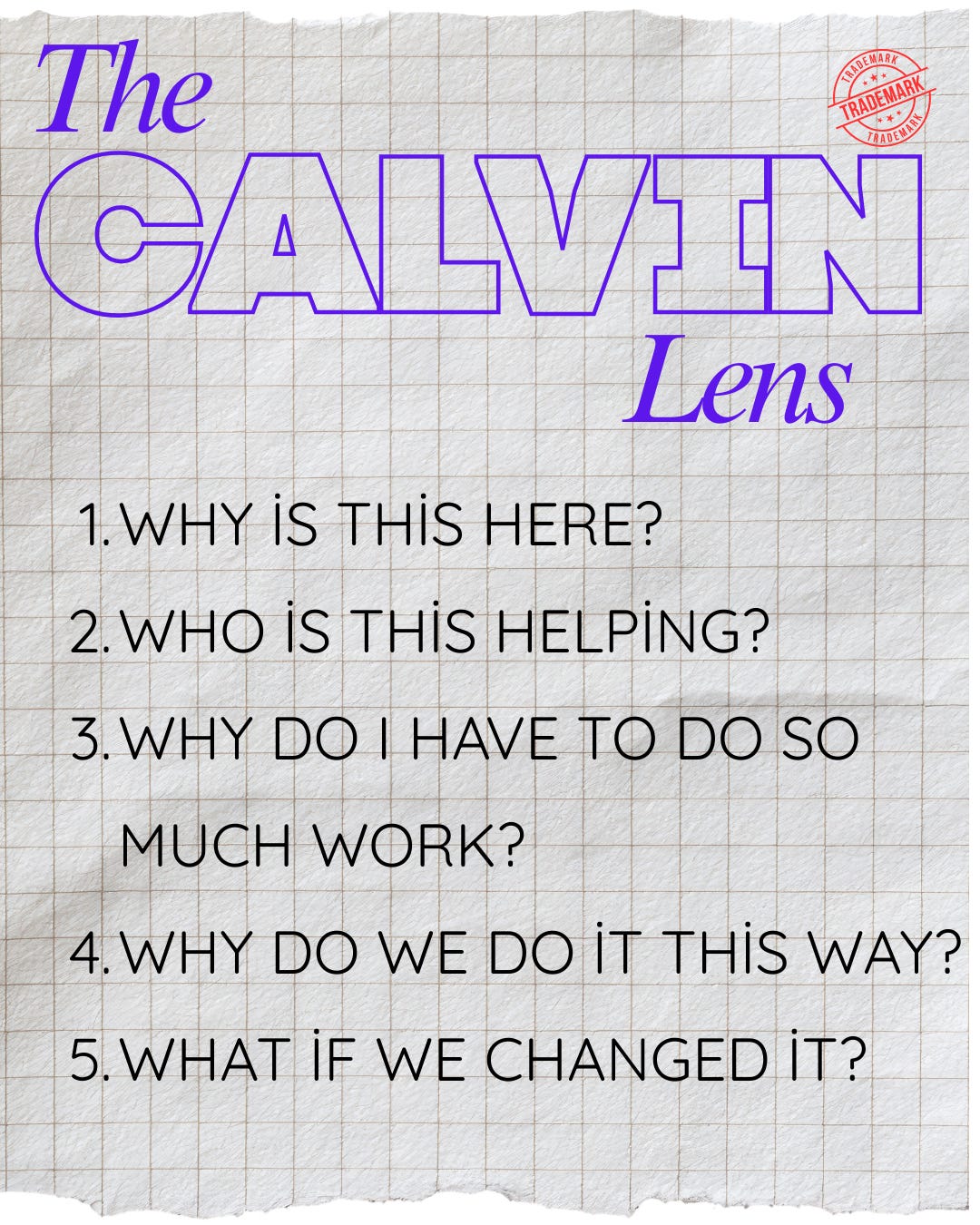
Five questions. That’s it:
Growth Science, at least the way I think about it, comes down to one thing: why do some users move forward while others drop off?
Every user journey is shaped by two forces:
Friction that slows people down.
Trust signals that move them ahead.

The Calvin Lens is a way to inspect a product through this equation:
Why is this here? forces you to explain the real purpose of a step.
Who is this helping? checks whether it matches the user’s motivation or just the company’s.
Why do I have to do so much work? exposes friction.
Why do we do it this way? usually reveals legacy decisions no one has questioned in years.
What if we changed it? opens the door to new behavior.
Most growth teams spend a lot of time analysing metrics such as CTR, conversion rate, and funnel drop-offs. But not enough time thinking about the underlying drivers and barriers in the user experience. The numbers matter, but they’re symptoms. The Lens looks at the cause.
I’ll use Strava’s new Instant Workouts feature as an example to explain further.
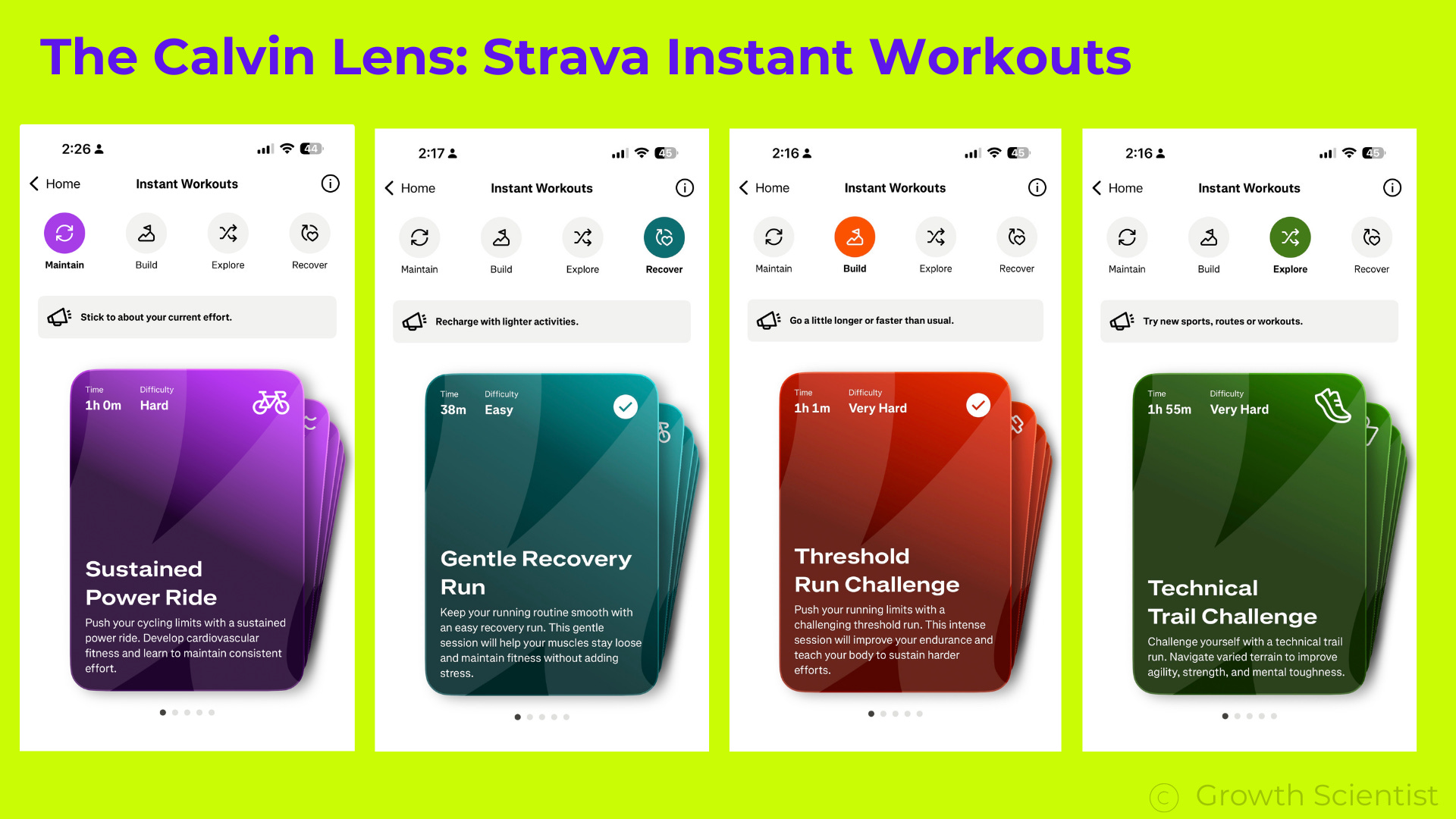
Instant Workouts are app-generated training sessions based on your recent activity, designed to tell you what to do today without having to plan it yourself. It has 4 different ‘experiences’ -
Maintain (current effort)
Build (Harder than current)
Recover (lighter than current)
Explore (new activities).
1. Why is this here?
Strava’s primary utility has been to record your activities. Instant Workouts pushes it toward coaching. The functional user need it fulfils is to remove the need for planning for someone who wakes up unsure what to do today. For example, if you’re new to running, this is helpful. You open the app, and you have a clear next step.
The deeper need it taps into is identity. People want to feel like they're training consistently, and the feature can help them live upto the identity of being a runner.
2. Who is this helping?
From a business perspective, it’s easy to see. This is a premium feature. More guided sessions mean more in-app engagement and more reasons to sign up for the paid subscription.
From a user perspective, it depends on who you are.
If you’re a beginner, daily recommendations feel supportive. If you’re training for a marathon or a 70.3, a generic workout can disrupt a structured plan.
I use Strava almost daily to train for races. The app’s header used to show my goals. Now it shows guided workouts, and I haven’t used it once. The workouts are personalized based on my past activity, but they ignore my future goals.
Several reviews have questioned how these workouts are generated and how they will sync with devices like Garmin and Apple Watch.
As an athlete, my question is simple: what are these workouts based on? My weekly mileage target? My race date? My taper schedule? None of that seems to factor in.
Since Strava recently acquired Runna and is planning an IPO, this feature signals a move toward goal-based coaching, but it is still quite half-baked in its current form.
3. Why do I have to do so much work?
If I were to do these Instant workouts, I would have to send them to my Apple Watch or Garmin device first for a seamless experience (and not having to reference my phone). This additional step is simply additional friction.
If I have to ignore the suggested workout, open another app, and cross-check my training plan, the friction shifts back to me. The feature was meant to reduce cognitive load. For goal-driven athletes, it adds a small layer of confusion.
4. Why do we do it this way?
Strava has rich data on my past: pace, fatigue patterns, frequency, and injury signals. That data tells the app what I can handle.
Future goals tell the app what I’m trying to become.
Instant Workouts lean heavily on the past. They react to what I’ve done. Serious training plans start with the destination and work backward.
5. What if we changed it?
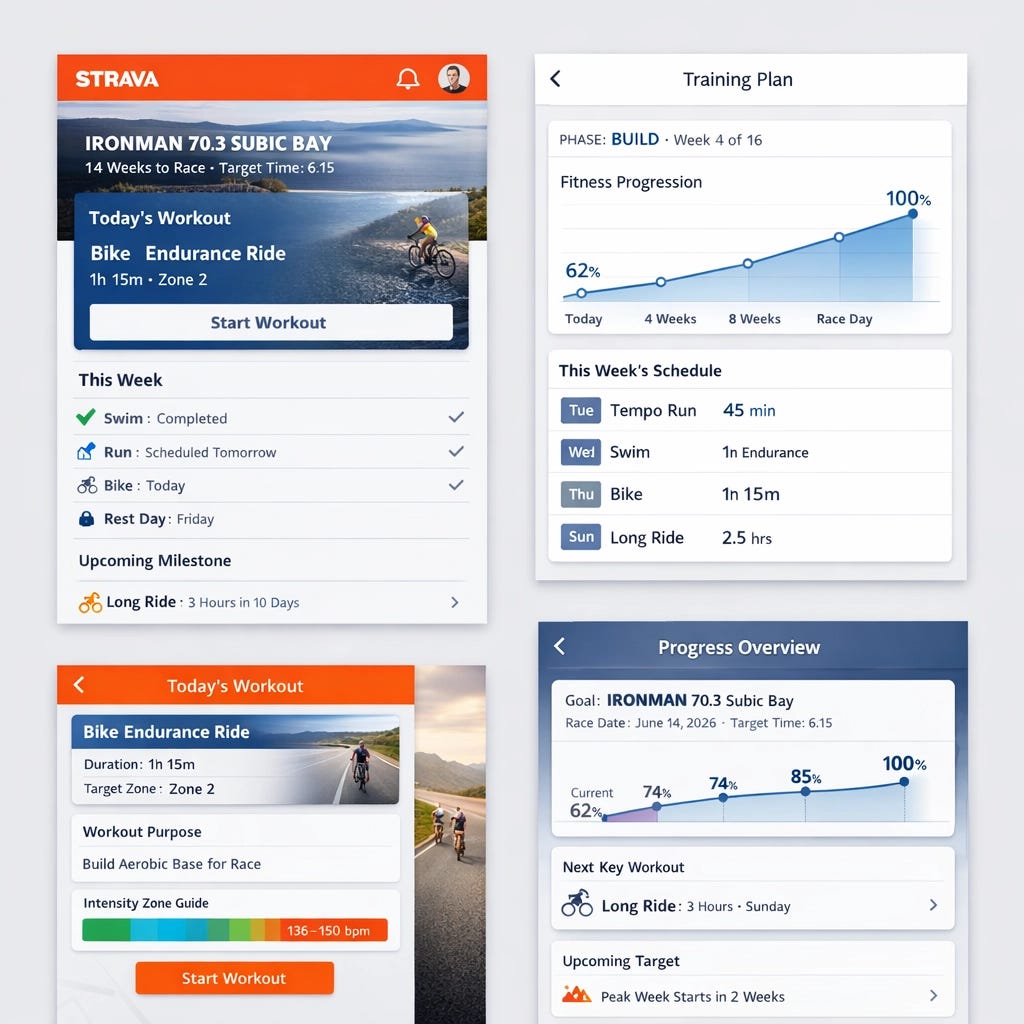
There are so many other apps that provide workout recommendations based on your future goals. In Training Peaks, you enter a race date and target time, and the system builds a full progression toward that goal. Garmin Coach does something similar if you use a Garmin watch. Runna focuses on runners and structures weekly workouts around a race distance and finish time.
These apps start with the finish line. If your goal is to climb a mountain, they look ahead to the 20 km ascent and build you up gradually so you can handle it. Strava’s Instant Workouts looks at yesterday’s 2 km walk and suggests something similar today.
As a triathlete training for specific races, I care more about where I’m going than what I did yesterday. Instant Workouts feel like a nudge for consistency. What I need is preparation for a destination.
That difference sounds small, but it changes everything. What if Strava redesigns its recommendation system and UI to be more goal-based, that looks something like this:
When I run Strava through the Calvin Lens, it is clear what could drive its growth and what could create barriers to it.
Instant Workouts reduce one kind of friction for beginners - of planning today’s session. For more seasoned athletes training toward a defined goal, new friction appears. The workouts don’t reflect race dates, taper cycles, or long-term progression.
If the app understands where I’m headed, I trust it. If it only responds to what I did yesterday, I hesitate. And hesitation slows growth.