

I have to confess that I know nothing about growth science. For plants.
I spent the last few months trying to improve my garden. I spent a lot of time and effort buying new plants and getting rid of the old ones. I was happy with how the garden looked, but unfortunately, many of the new plants are now dying. And I am dreading that my entire effort was in vain. 😩

What mistake did I make?
My plantitas tell me that while I focused on what was visible: the plants, I did not think much about the underlying growth conditions suitable for those plants: sunlight, drainage, soil quality, watering cycles, etc.
Healthy systems grow naturally. Unhealthy systems need constant manual intervention.
Growth marketing works the same way. More campaigns and content are not enough to sustain growth. What matters is the underlying system.
It was a surprising realization for me that there is, in fact, nothing novel about growth math. We learned the basics when we were in school.
It goes back to the concept of compounding, aka Geometric rate (vs. an arithmetic rate).
The arithmetic rate is: 10 → 20 → 30. Growth rate = +10 in each cycle.
The geometric rate compounds. 10 → 20 → 40. Growth rate = ×2 in each cycle.
And it appears every system that grows fast: virality, customer funnel, network effects, etc.
The math of geometric growth is not hard to understand :
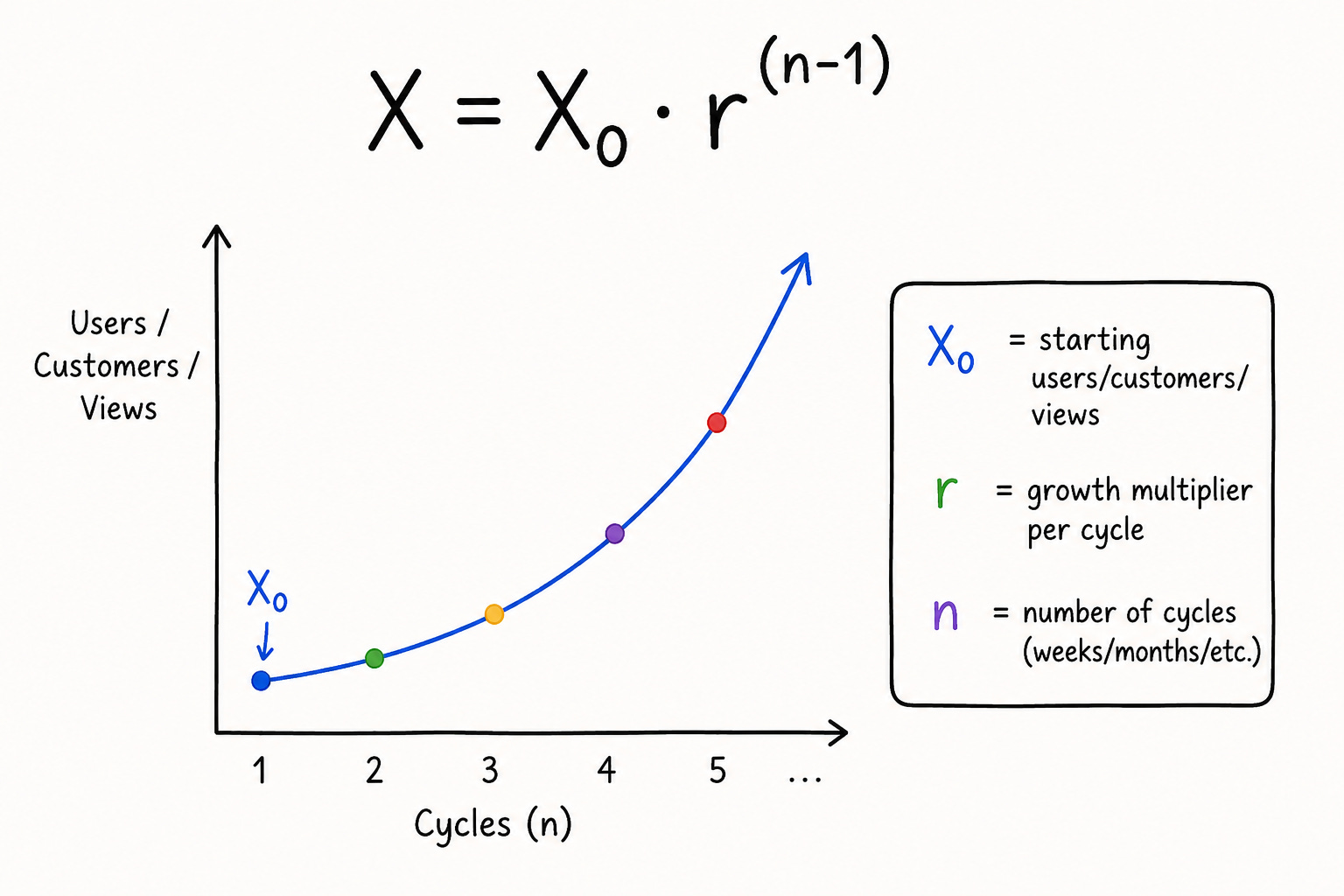
What is hard is figuring out the correct growth multiplier - the underlying behavior, incentive, loop, or mechanism that causes growth to create more growth.
Adding more plants does not make a garden grow. Similarly, adding more campaigns and glossier creatives will, at best, create an illusion of growth that will not survive without extrinsic interventions.
To create an intrinsic growth multiplier for a campaign, think about the underlying human behavior that you can target and incentivize to create a loop of growth. For example:
1. ALS Ice Bucket Challenge
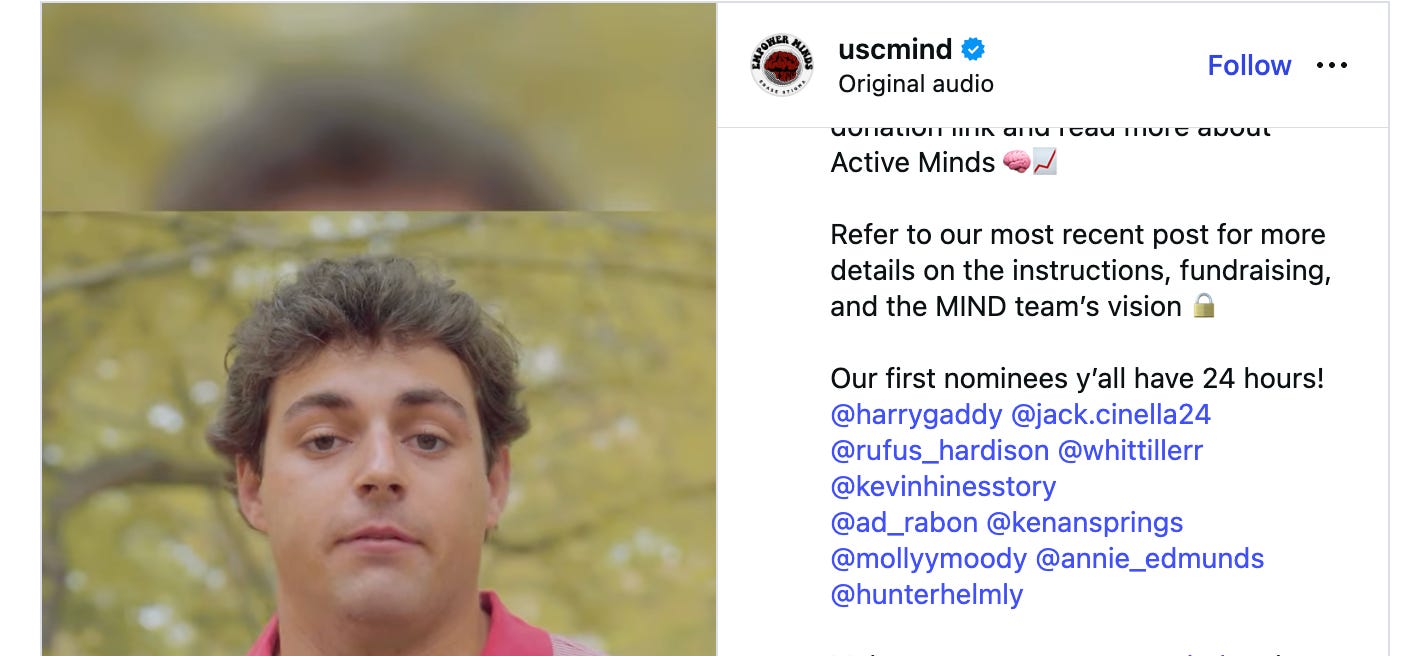
The campaign grew when each participant nominated multiple new participants by tagging them.

Suppose each person who did the challenge usually nominated 4 people, and 50% of those nominated accepted. That means every 1 participant created 2 new participants. So the growth multiplier here is 2.
♻️ The underlying human behavior that drove growth was the ease of public nomination, which created peer pressure to support a good cause.
2. “Get your free email at Hotmail.”
When Hotmail was launched, every email sent had this default message at the end:

Growth Multiplier = Emails Sent per User x Email Signup Rate
If each user sent 50 emails and there was a 10% signup rate, the growth multiplier was 5.
♻️ The underlying behavior targeted here was people's tendency to trust others' recommendations, especially when those are put into practice.
3. Share a Coke
Coke put names on bottles, which turned the product into something people sought out, photographed, and gave as gifts.
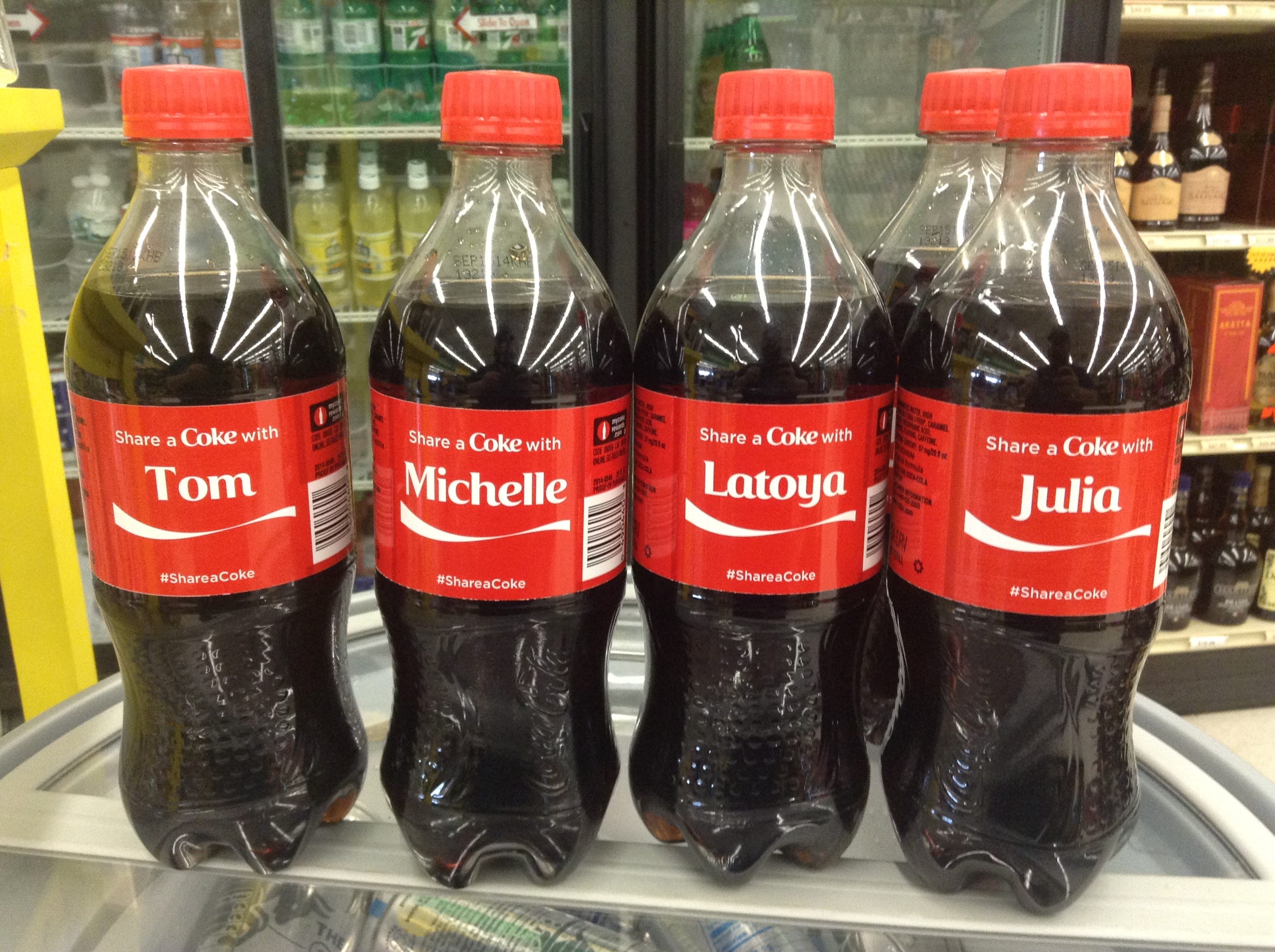
Growth = People Reached x Sharing Rate x Participation Rate
Suppose 1,000 people bought Coke, and 10% found their own name or a friend’s name exciting enough to share. Then 100 people shared this post, each reaching 20 friends. If 5% of those friends also bought/shared it, then the growth multiplier is 100.
♻️ The underlying behavior is that people love to see their own name or the name of someone they know. It’s an inverse personalization to think of it - instead of the algorithm identifying you, Coca-Cola made you identify yourself in the product.
And this is what I love so much about growth science: the math and the human psychology go hand in hand.
The equation explains how growth compounds. Human behavior explains why it compounds.
Growth science brings the best of the left and right brain together. 🌱🌱🌱
Thanks for reading.
While you are here…
Hi, I am Munmun, the person writing this newsletter! I enjoy exploring data and behavioral science to solve growth challenges.
If you manage growth, especially at an early-stage startup, then this Substack is for you.
You can also find me on LinkedIn, where I occasionally talk about marketing, triathlons, and sometimes my kids.
Finally, Growth Scientist is now free and will likely remain so. If you find it worth your time, consider sharing it with a friend.
Love,
Munmun
The global economic outlook is becoming more uncertain.
The International Monetary Fund has lowered its 2026 global growth forecast to around 3.1%, signaling a broad-based slowdown.
This revision reflects mounting pressures:
Geopolitical conflicts disrupting stability
High energy prices increasing costs worldwide
Trade tensions weakening global cooperation
At the same time, inflation is expected to remain elevated longer than previously anticipated
placing additional strain on households, businesses, and governments.
Excellencies,
This is not a temporary fluctuation.
It is a sign of a more fragile global economic environment.
We are entering a phase where:
Growth is slower
Risks are higher
And policy choices are more constrained
The challenge before us is clear:
We must navigate between:
Supporting economic growth
Containing inflation
And maintaining financial stability
This requires:
Coordinated global action
Responsible fiscal and monetary policies
And renewed commitment to economic cooperation
Because in an interconnected world,
economic weakness in one region
quickly becomes a challenge for all.
The global economy may be slowing
but with the right decisions,
it does not have to stall.