

Whenever I come across an interesting marketing fact or story, I save it. Then, when I sit down to write this newsletter, I go through this archive of screenshots and bookmarks to select a topic that interests me.
For this newsletter, I am testing a new format that aims to connect the dots between these snippets I have collected over the past few weeks:
Data → a number that matters
Experiment → a test worth running
Observation → a consumer insight
1. A number that matters.
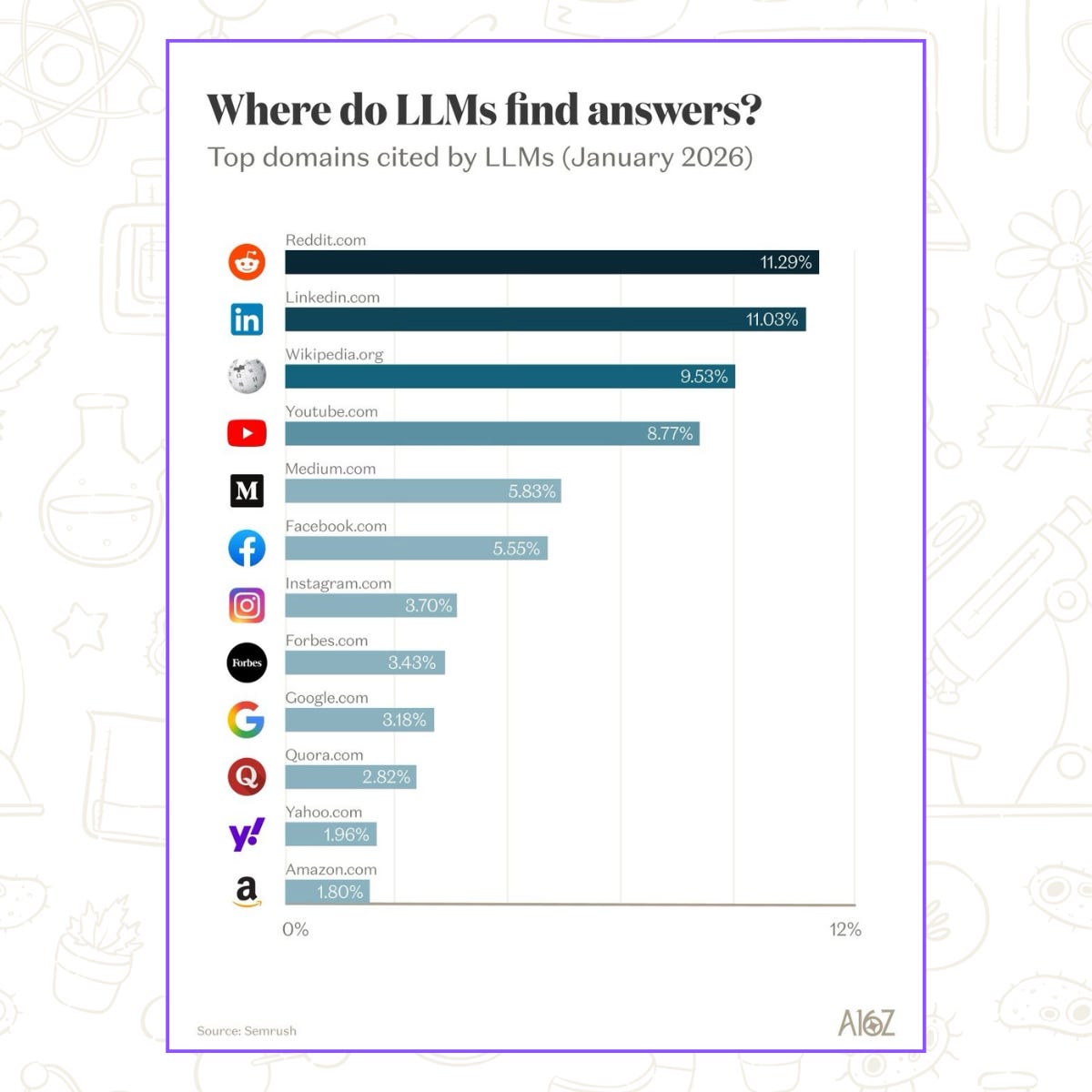
Brand websites hardly feature in top domains cited by LLMs.
As more people get their queries answered by LLMs, a brand’s presence on Reddit and LinkedIn might become much more important than its website.
These websites are also seeing a decline in organic traffic due to AI overviews.
According to SimilarWeb, zero-click searches reached 69% in 2025, and the CTR for the position 1 website decreased by 34.5%.
But the good news is that the traffic that does end up on the brand websites is higher-quality than before. The CTA for marketing teams is to ensure websites are optimized for engagement and conversion now more than ever.
2. A test worth running.
A corollary of the above data is that the experiment every marketing team should be running is to measure how often their brand is cited, recommended, or summarized in AI-powered search results compared to competitors. This metric is called the AI Visibility or Share of Model (SoM). Here is how to go about it:
Pick 10–20 high-intent questions in your category. You can use the free AI visibility tool of Neil Patel to identify the key prompts relevant to your industry
Note the mention and position of your brand in the answers and the most common sources across these questions
Work on appearing in the content of these sources, such as answering these questions on Reddit
Track how much referral traffic you are currently getting from LLMs and the change after your updates on Reddit and other sources
This test will help you identify and leverage high-value offsite mentions.
3. A consumer insight.
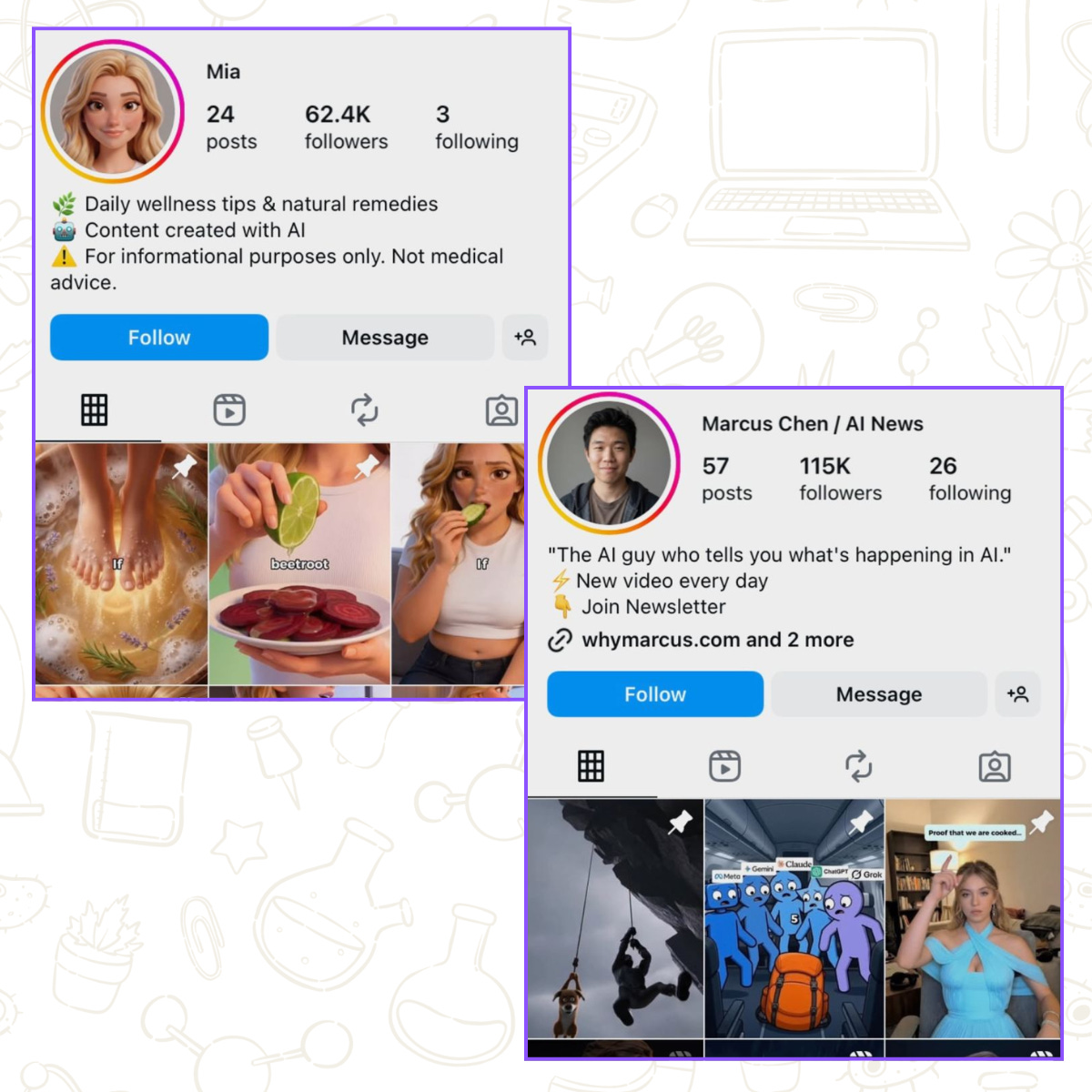
Mia is quite obviously AI-generated. So is Marcus.
An AI-native ad agency has created these AI influencer personas to build audiences around very specific interests, then use them to test content, run experiments, and eventually partner with brands on campaigns.
What surprises me is how quickly AI influencers are gaining real followings, even when people know they are not real.
They are not that different from gaming characters or virtual idols. So what is their appeal? Do people just care about the content, and is it irrelevant who delivers it?
Personally, the idea of AI influencers does not appeal to me. Lately, I have been loving influencers who seem completely unpolished, such as Raji Didi, Santu, and Puja. Puja has been a topic of discussion, a consequence of her sudden follower growth to 675,000 in only about 130 posts over 6 months. These women are changing the definition of who an influencer is, and, in my opinion, no AI can match their authenticity. We certainly need more of them!

While you are here…
Hi, I am Munmun, the person writing this newsletter! I enjoy exploring data and behavioral science to solve growth challenges.
If you manage growth, especially at an early-stage startup, then this Substack is for you.
You can also find me on LinkedIn, where I occasionally talk about marketing, triathlons, and sometimes my kids.
Finally, Growth Scientist is now free and will likely remain so. If you find it worth your time, consider sharing it with a friend.
Love,
Munmun